

Winter on the Central Coast has a way of lingering even when the light begins to shift. The days grow longer, but the body does not immediately trust it. The shade stays cool and damp, even when the temperatures begin to warm. People move through town doing what needs to be done, functioning, showing up, holding it together, while something underneath remains unsettled.
Many of us sense that something is ending. Fewer of us know what is coming next.
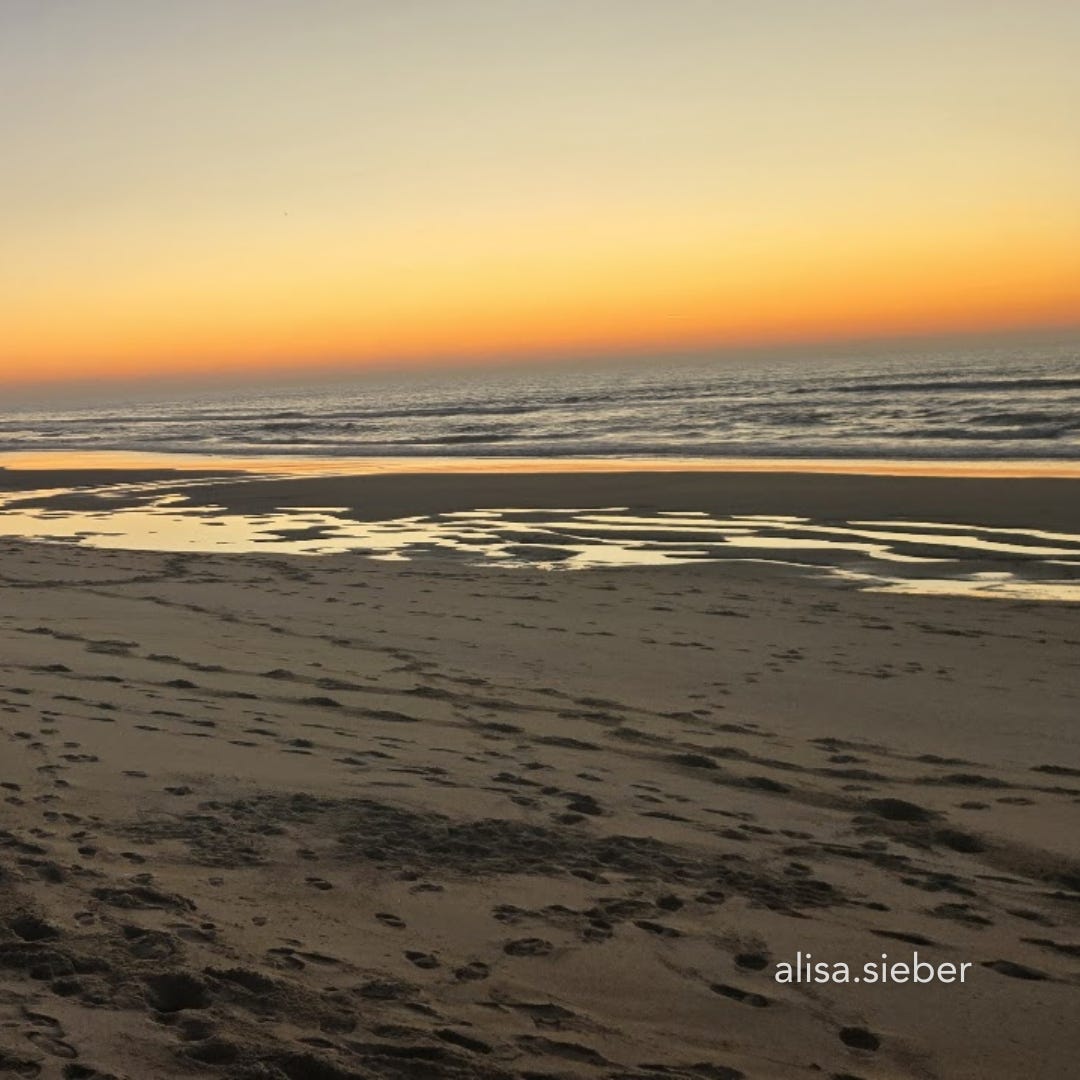
In Santa Cruz, that uncertainty lives not only in our thoughts but in our bodies. Melissa Fritchle, a longtime therapist and ecospiritual guide, names what she is seeing with clarity and care. “People are both constantly overstimulated and also disconnected,” she says. Agitated and exhausted at the same time. Flooded with information, yet cut off from anything they can touch. The constant churn of national news, the absurdity and dread of it, combined with the relentless pull of screens, has left many people unsure how to settle or even how to access joy.
What we pay attention to most hours of the day lives behind glass. Our nervous systems know this, even when we try to ignore it.
And yet, we live here. In a place where redwoods still breathe, where the ocean keeps its rhythm, where fog and birdsong and soil remain available to us if we slow down enough to notice. “We need the redwoods right now and the rhythm of the ocean to bring us back into the present moment,” Fritchle says. Slowing down externally allows something internal to soften. Wonder becomes possible again. That, she says simply, is healing.
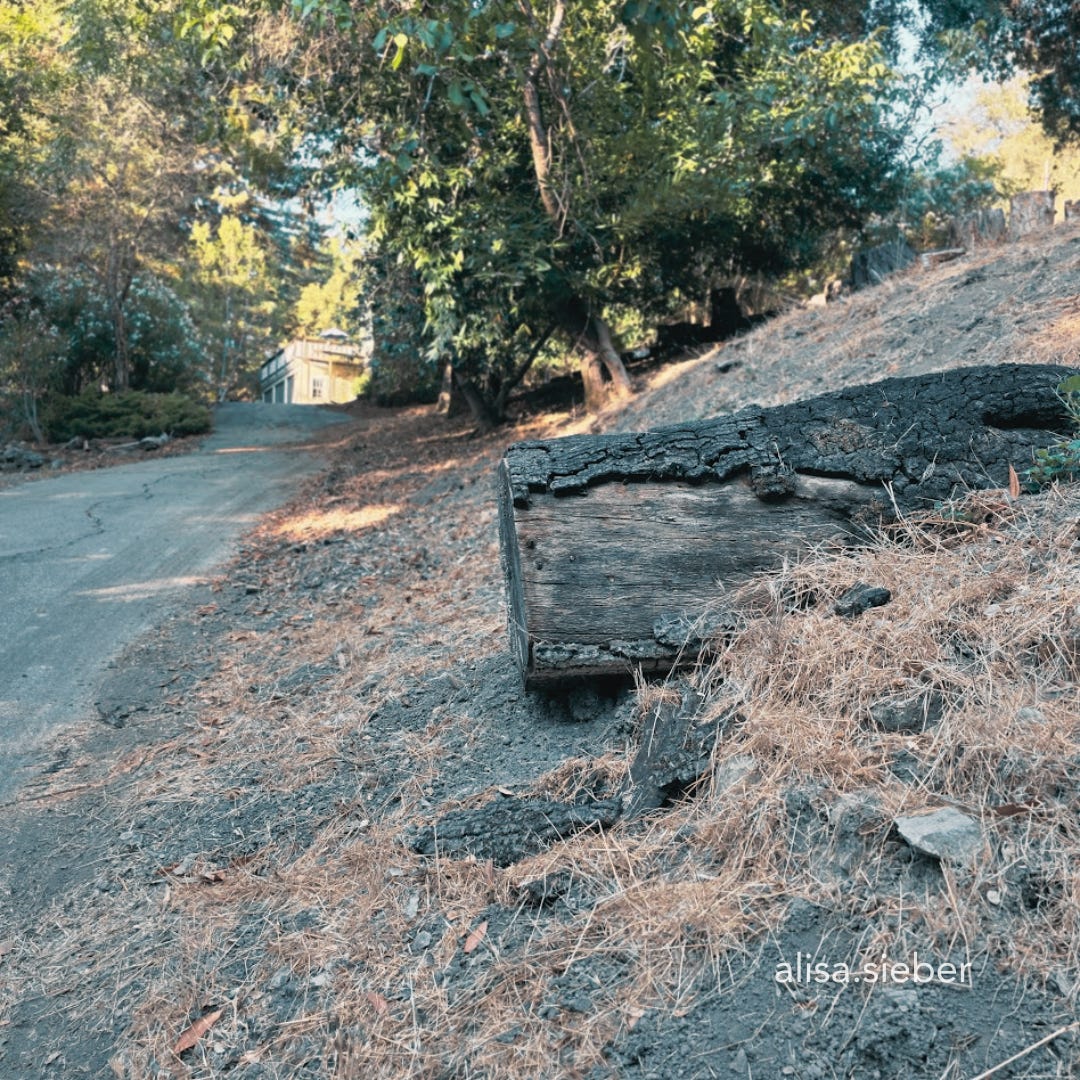
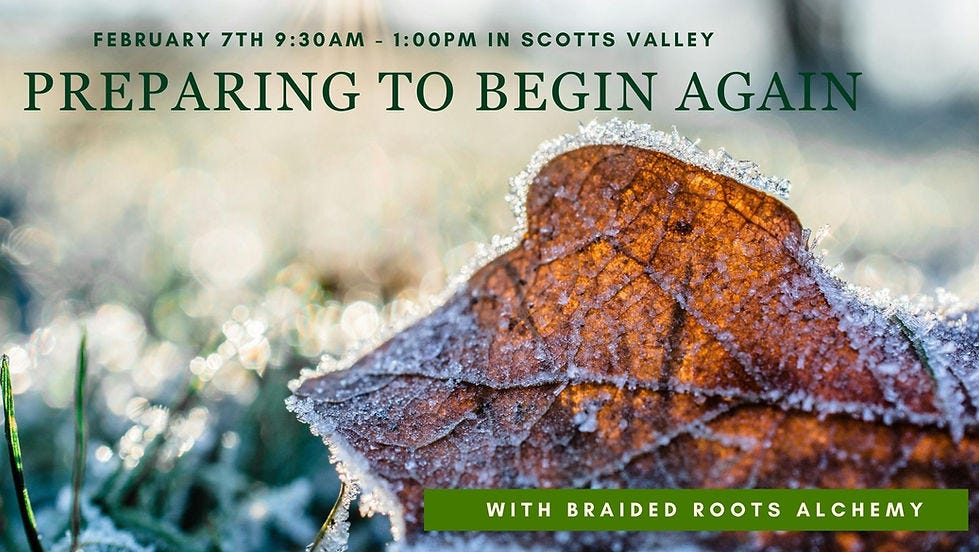
This is the context in which a small gathering called Preparing to Begin Again will take place on February 7 at Chez Serendip, a private retreat space tucked into the redwoods of Scotts Valley. The gathering is guided by Braided Roots Alchemy, a council of three women who have worked together for more than two decades. It is timed intentionally to Imbolc, the ancient midpoint between winter and spring.
Imbolc is not a holiday of arrival. It is a season of becoming. The word itself translates loosely to “in the belly,” a reference to pregnancy, to seeds rooting underground, to life that is forming but not yet visible. The branches are still bare. The wildflowers have not emerged. Beneath the soil, everything is already in motion.
“I love these in between times,” Fritchle says. “They are so potent.” She describes Imbolc as a moment when new ideas are forming, even if their shape remains unknown. “So much seems to be ending, but what comes next is not yet clear. And that can be scary, but it is also a normal part of a cycle.”
For Santa Cruz, this feels uncomfortably familiar. We are a community that has weathered fires and floods, housing instability, institutional collapse, and an ongoing sense that the ground beneath us is shifting. There is pressure to move forward, to rebuild, to innovate, to be resilient. There is far less permission to pause and acknowledge that we are still in the middle.
Preparing to Begin Again is not an attempt to rush that process. It is an invitation to stay with it.
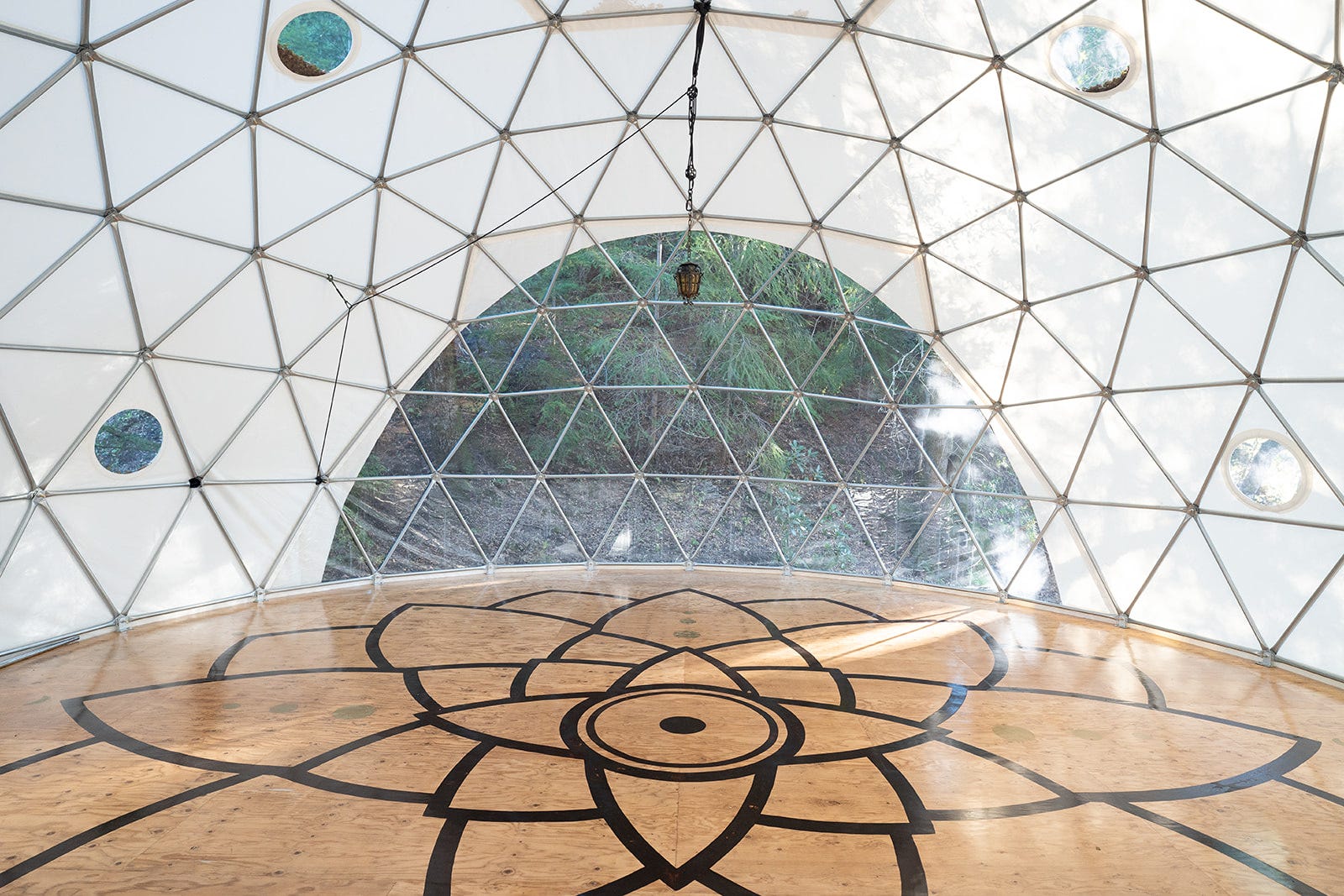
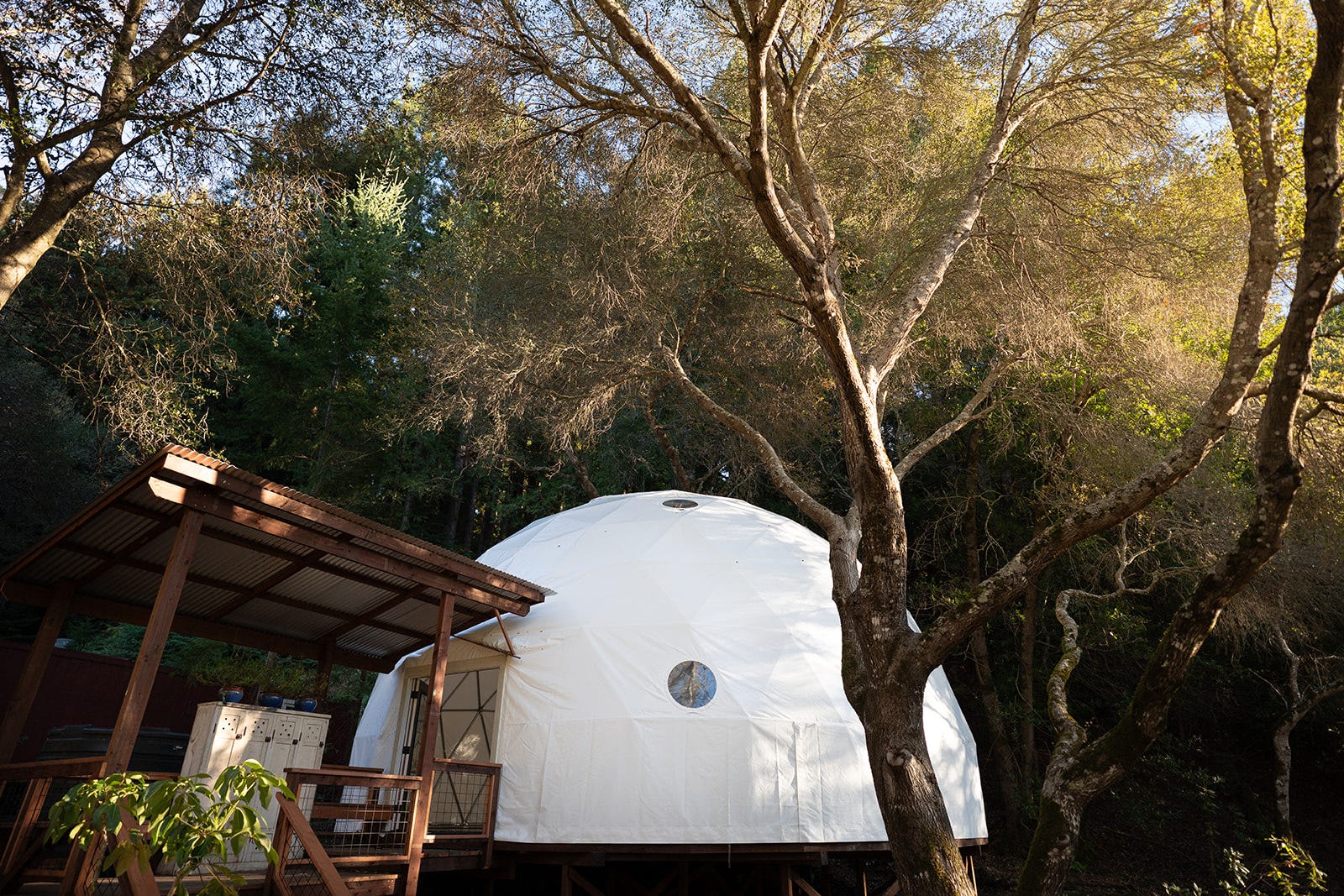
The gathering unfolds over a long morning in the Lotus Dome, a circular space held by redwoods and quiet. The practices include sound healing, guided journeying, breathwork, ritual, prayer, and time in nature. But the practices are not the point. They are containers. What matters more is how the space is held.
Braided Roots Alchemy is guided by Fritchle alongside Laura Stoll and Corinne London. The three women met in graduate school studying holistic psychology and have been creating rituals together ever since. “We trust each other deeply, and I think that is felt in the spaces we create,” Fritchle says. Their long relationship allows them to be responsive rather than prescriptive. Nothing is routine. Nothing follows a formula. Each gathering responds to what is alive in the room.
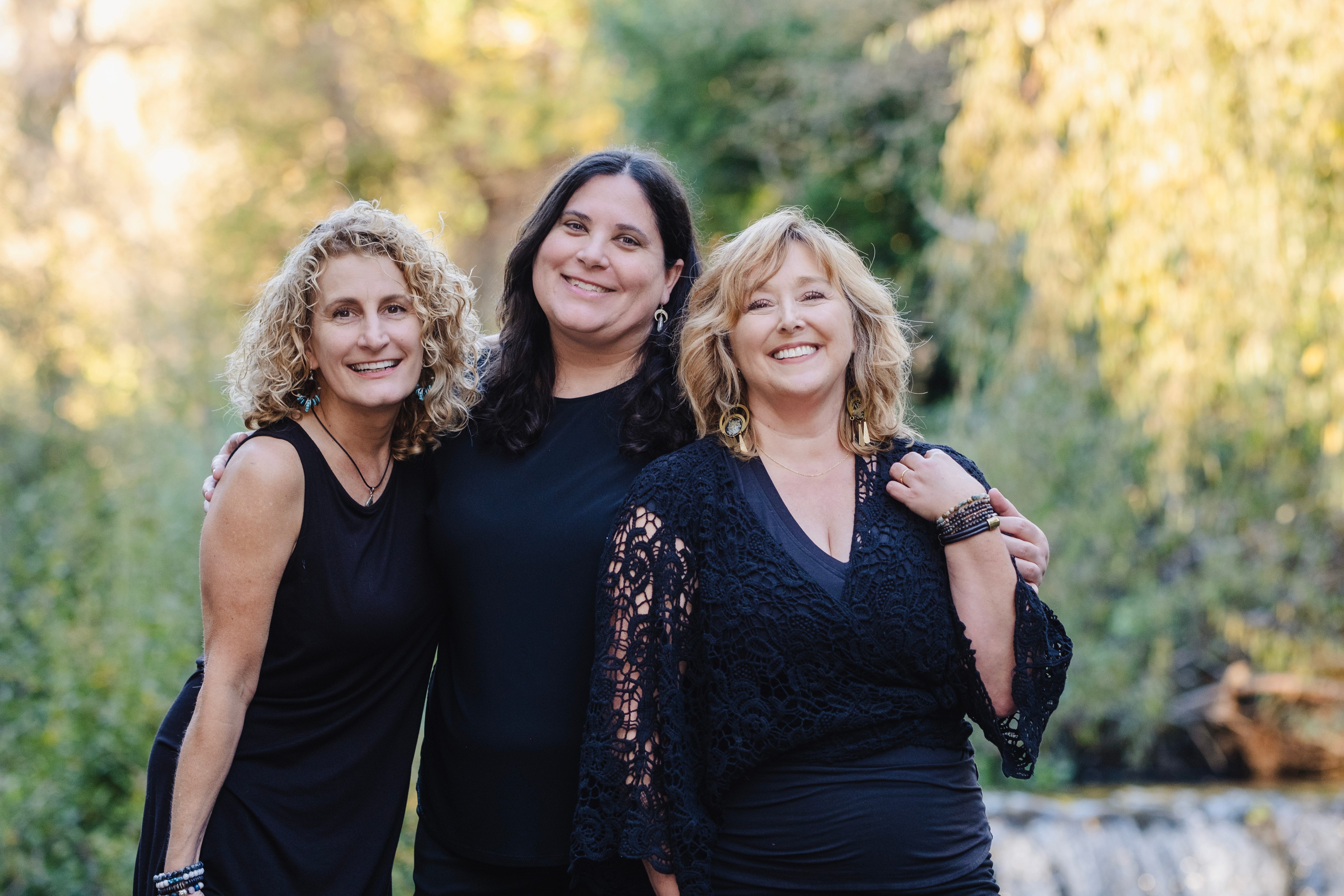
“There is nothing that is routine or follows a prescription in anything we offer,” she says. “We believe in the spontaneous and in drawing on what is alive for each person.”
This emphasis on attunement sets the gathering apart in a place rich with wellness offerings. Santa Cruz does not lack sound baths, retreats, or workshops. What is rarer is a space that resists urgency so fully, that values slowness not as a luxury but as a necessity.
“When our footing seems unstable, slow down,” Fritchle says. “Let your body feel its way forward.” Modern culture, shaped by capitalism and constant production, teaches us to push through uncertainty, to stay busy, to keep moving. But speed does not guarantee direction. “You can barrel forward using all the willpower you have got and then one day realize you do not know if you are heading toward something you actually want.”
Slowness, in this context, becomes an act of discernment. A way to ask better questions. What do we want our communities to look like. What might joy feel like now. What kind of future are we actually willing to inhabit.
“We do not know what future we are walking into,” Fritchle says. “But we can engage with what is happening right now. We can slow down and be present for each other and for the beauty of things. We can discern and replenish.”
This is where gathering matters.
Modern life often frames healing as a private endeavor, something to be managed alone or behind closed doors. Fritchle challenges that assumption. “It is the myth of Modernity that has caused us to forget that we actually are always in community,” she says. We exist within ecosystems of weather, plants, soil, sun, and other people whether we acknowledge it or not. The loneliness many feel is less about isolation and more about disconnection from those larger rhythms.
Gathering together in conscious community allows people to be witnessed at a particular moment in their lives. It creates a shared container where energy can move, where something can be released simply by being seen. “Someone else might say exactly what you needed to hear,” Fritchle says. “And your quiet presence may be exactly what someone else needed.”
The land itself plays an active role. The gathering takes place among old-growth redwoods, not in a studio or clinic. “The trees are like a council of elders circling around us,” Fritchle says. The smell of damp soil, the sound of birds, the sense of being held by something older than urgency shifts the body quickly. Heart rates slow. Breath deepens. A different sense of time becomes available. Creativity and imagination, long suppressed by constant stimulation, begin to return.
This is not about escape. It is about remembering.
Fritchle hopes the people who feel called to attend are those who sense an unnamed longing. “A longing to reconnect with themselves holistically,” she says. An ache to slow down. A desire to move at the pace of winter rather than fight against it.
Not everyone can name that longing yet. Many only feel the tension it creates. This gathering meets people there, in the not knowing, in the belly of the season, before anything needs to be resolved.
Beginning again does not require certainty. Sometimes it starts with staying still long enough to listen for what is quietly forming underneath everything else.
Reserve Your Spot
Preparing to Begin Again with Braided Roots Alchemy
Saturday, February 7, 2026
9:30 a.m. to 1:00 p.m.
The Lotus Dome at Chez Serendip, Scotts Valley
This long morning gathering takes place at the threshold between winter and spring, guided by Braided Roots Alchemy, a collaborative council of healers Laura Stoll, Melissa Fritchle, and Corinne London. Together, participants will move through sound healing, guided journeying, breathwork, ritual, prayer, and time in nature, creating space to release what winter is ready to let go of and to tend what is quietly forming beneath the surface.
The gathering will be held at a private retreat space in the redwoods of Scotts Valley. The address will be shared after registration.
The cost is $90 for the day. A limited number of sponsored spaces are available. If cost would prevent you from attending, you are encouraged to reach out.
Space is intentionally limited to preserve the intimacy of the container.
About the Author
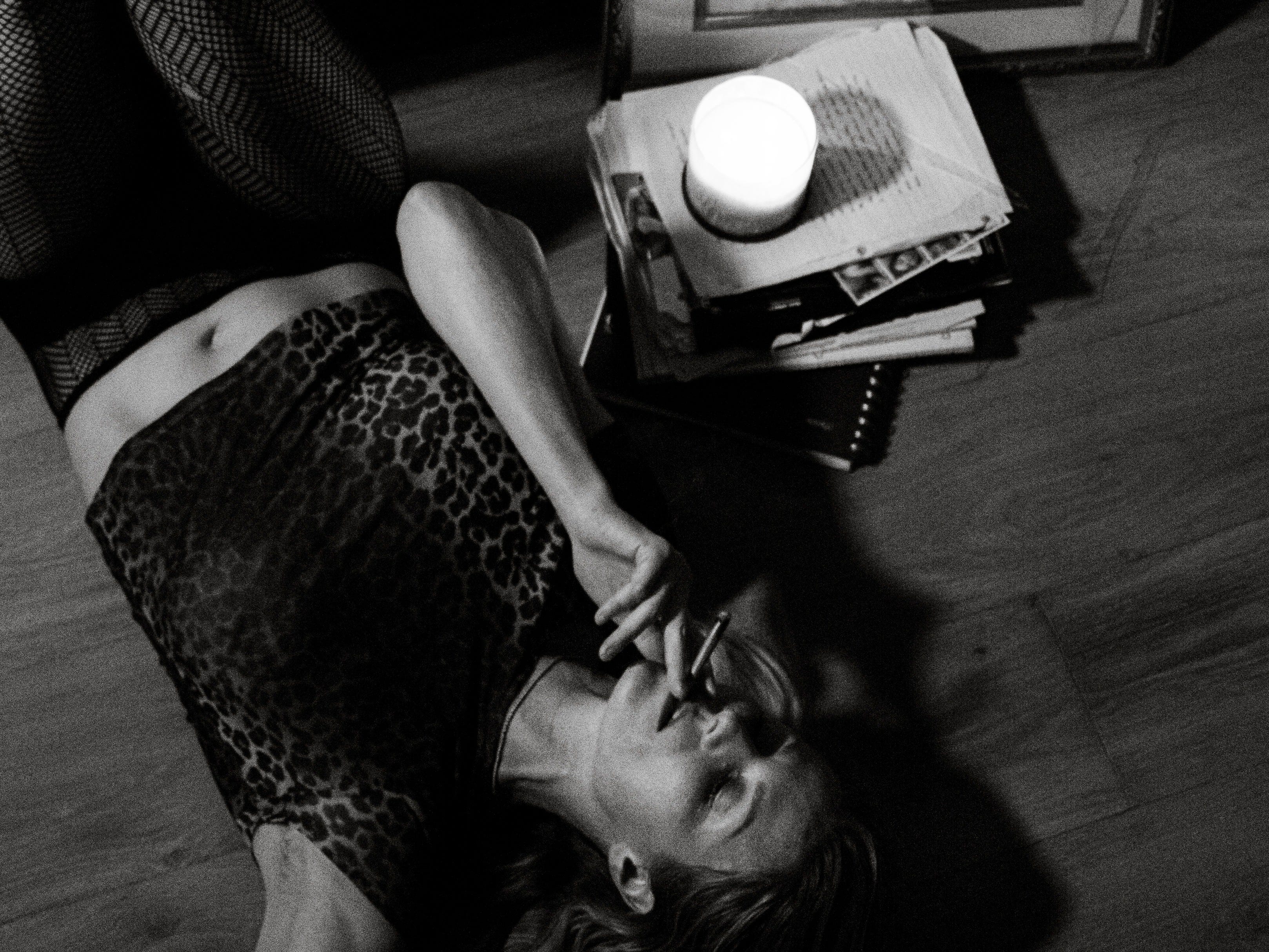
Alisa Sieber is a writer, veteran, and founder of Chez Serendip, a creative sanctuary and artist residency tucked into the redwoods of Scotts Valley, California. Her work lives at the intersection of art, memory, and lived experience, often exploring what happens when people slow down long enough to tell the truth.
She is the author of How the Fuck Did I Get Here? (HTFDIGH) and How the Fuck Did We Get Here? (HTFDWGH), twin series of radical self-inquiry and journalism disguised as personal essay. Across her writing, Alisa traces how individual reckoning reveals collective patterns, examining creativity, generational cycles, power, spirituality, and the quiet resistance found in making art together.
As a contributor to The 831, Alisa covers Arts & Culture through a deeply local lens, focusing on music, film, and creative spaces that challenge extraction, hierarchy, and performance culture in favor of intimacy, presence, and connection.
Connect
✉️ Email: alisa@chezserendip.com
🧠 Substack: alisasieber.substack.com
📸 Instagram: @alisa.sieber
▶️ YouTube: @writingbyalisa
Read More by Alisa Sieber
Alisa’s Arts & Culture writing explores how music, film, and creative spaces become sites of resistance, remembrance, and belonging. Rather than reviewing art as product, she approaches it as lived experience, asking what stories reveal about power, community, and the rooms we gather in.
If this piece resonated, you may also want to read:
Additional Arts & Culture stories can be found at The 831, where Alisa covers music, film, festivals, and creative rebellion across Santa Cruz, Monterey, and San Benito counties.
About The 831
The 831 is an independent journalism collective serving California’s Central Coast, including Santa Cruz, Monterey, and San Benito counties. Born after the collapse of local media, The 831 exists to restore proximity, accountability, and creative rebellion through storytelling.
We believe journalism should feel human, lived-in, and rooted in place. Our stories are written by people who live here, who know the tide, the traffic, and the weight carried in small moments.
From Arts & Culture to News & Accountability, from Community Voices to Environment & Science, The 831 documents the creativity, contradictions, and courage of the Central Coast.
No algorithms. Just people telling the truth about where they live.
Awesomely Said