
Analog Dog Band and the Art of Staying Human in a Digital World
A reminder that music still works best in real rooms, see them play live

You ever meet someone and feel like you’ve known them in another life? That happened to me when I met Austin Waz. He introduced himself simply: “Co-founder of the San Francisco–based psychedelic indie disco band Analog Dog. Purveyor of magic and dreams. A socialist. A San Franciscan from Ohio. A lover and a fighter. A designer of a new world.”
I felt that in my bones.
Austin and I met at San Francisco’s Hyde Street Studios during their Christmas party. After Bob Weir passed the week I was writing this, it felt significant that my first real conversation with Austin had happened there, in a room where the Grateful Dead once recorded music rooted in communal listening and improvisation. That same current ran through what Austin and I dreamed up that night.
The studio was crowded with musicians and engineers and friends who had been orbiting each other for years. There was laughter, spilled drinks, half-finished conversations, phallic sketches left on notepads beside dial-up phones, all layered over the ghosts of records cut there decades before. It felt like standing inside a living archive.
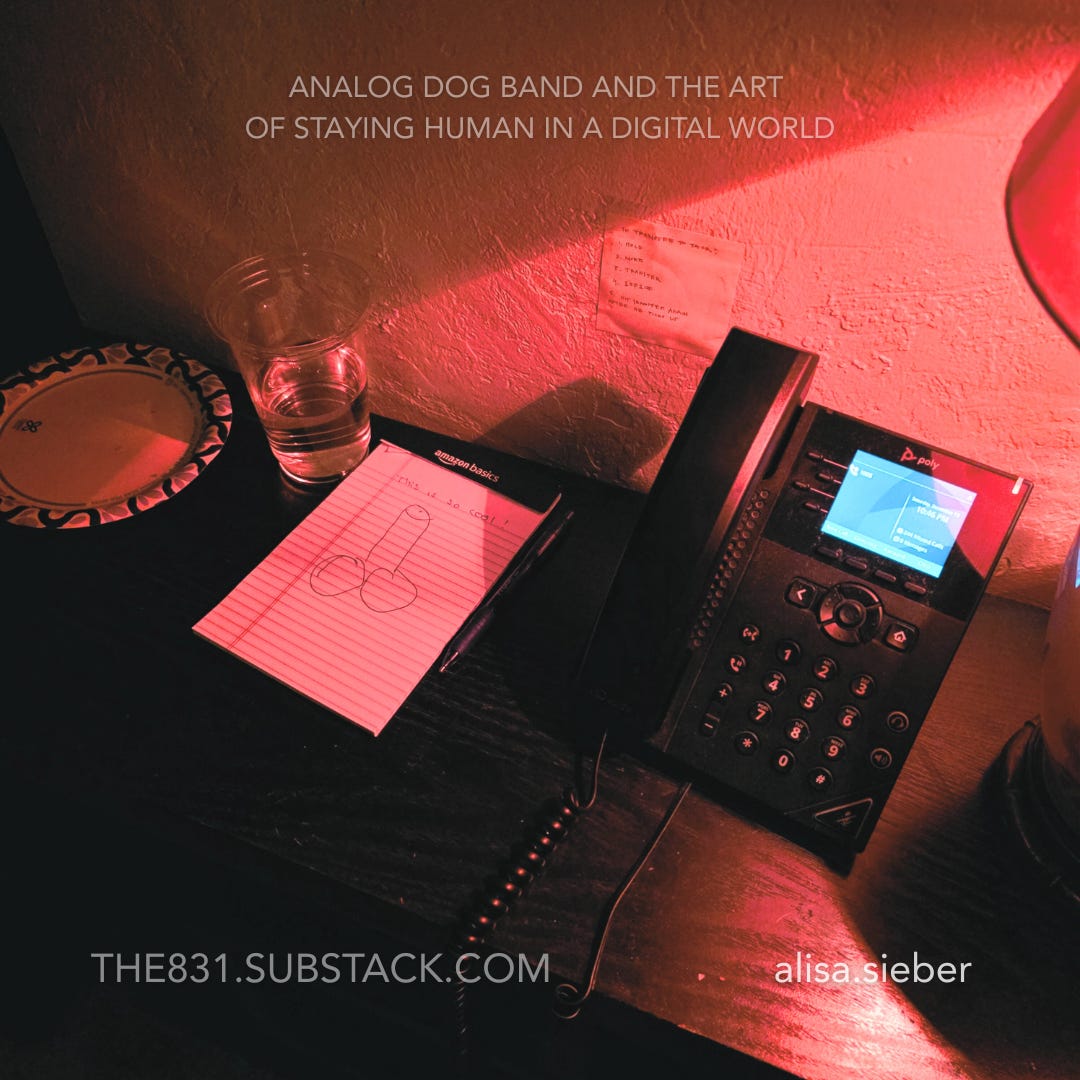
Borrowing from Austin’s own lyrics, “Disco makes me go fucking crazy / We should’ve been born before the 80s,” we stood next to rows of guitars and mixing tables talking about sound. Not clean sound. Not optimized sound. The kind that carries longing inside it. The kind you try to preserve even when you know it will eventually be forgotten.
Listen to Analog Dog while you continue to read…
We dreamt up an idea of creating a song built entirely from nostalgic noise, the hiss and whine of early technology, the language of a world that once promised connection but often delivered absence instead. Dial-up meets busy signal as a love song to what slips away.
Only later did it register how charged that meeting place really was. Conversations like that can change the course of everything, if we’re willing to pay attention to the small stories unfolding between the ordinary worlds we’re trying to bridge.
“Everyone knows I want to be the change of the world,” Austin said. “But I easily fail at making the changes inside myself that would actually embody it. I guess that makes me human.”
We talked about music and mental health, about spirituality in a digital world built to extract attention, about how certain sounds hold entire emotional landscapes inside them.
At some point, I asked him if Analog Dog ever played in Santa Cruz.
He told me they had an upcoming show.
Without hesitation, I invited him and the band to stay at Chez Serendip.
You won’t see signs for Chez Serendip from the road. It sits quietly in the redwoods of Scotts Valley, hidden just enough to feel intentional. Close to Santa Cruz, but removed from its noise. The house was built during Prohibition, carrying the hush of a time when gathering and creating happened discreetly, behind closed doors. At its center is a deep devotion to music, anchored by the Carriage Room, built around a 1902 Steinway piano that has absorbed more feeling than any hard drive ever could. It is a place designed for artists to fall apart and make art from the pieces, a space where intimacy and honesty matter more than output.
Austin did not hesitate. He said yes. And so did the rest of the band.
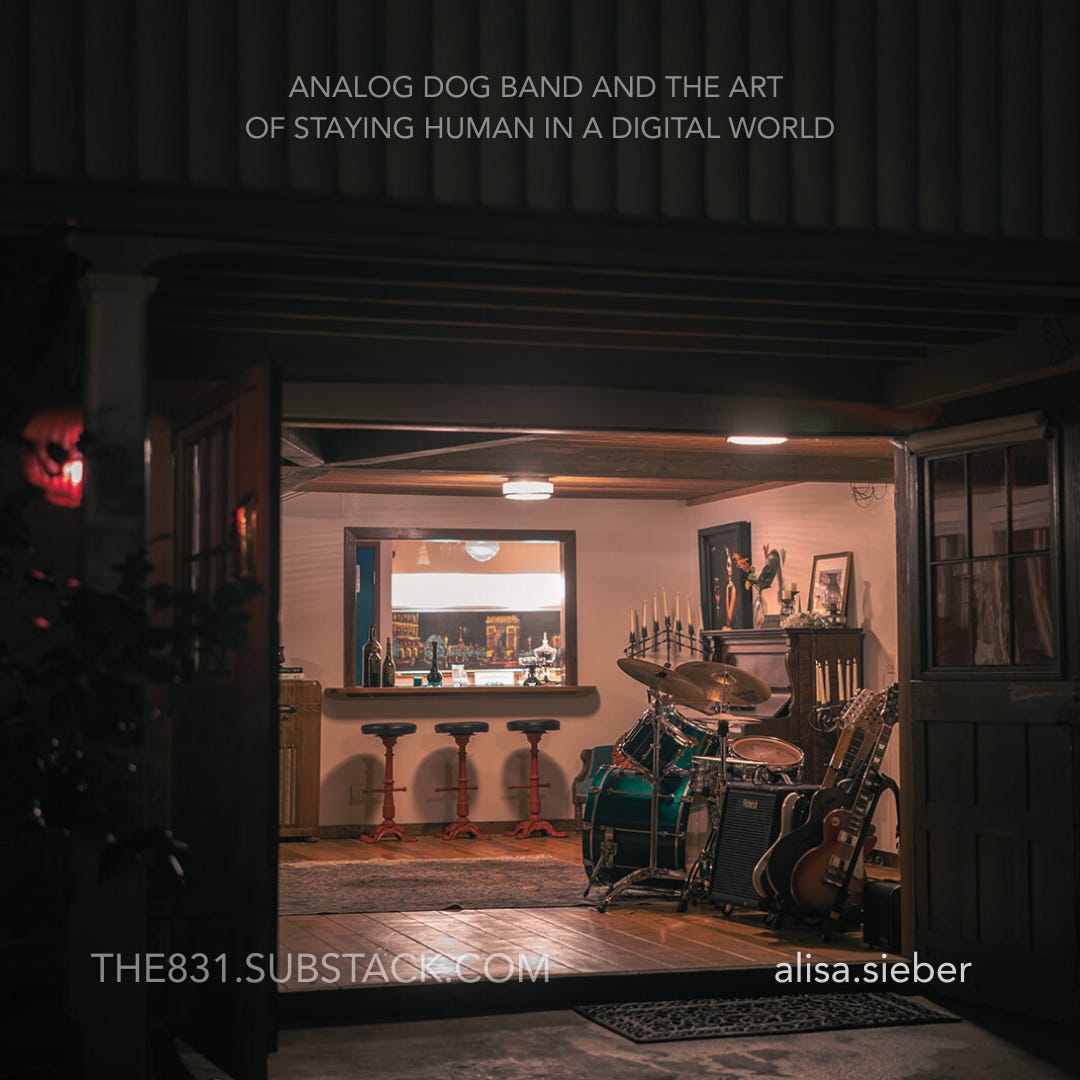
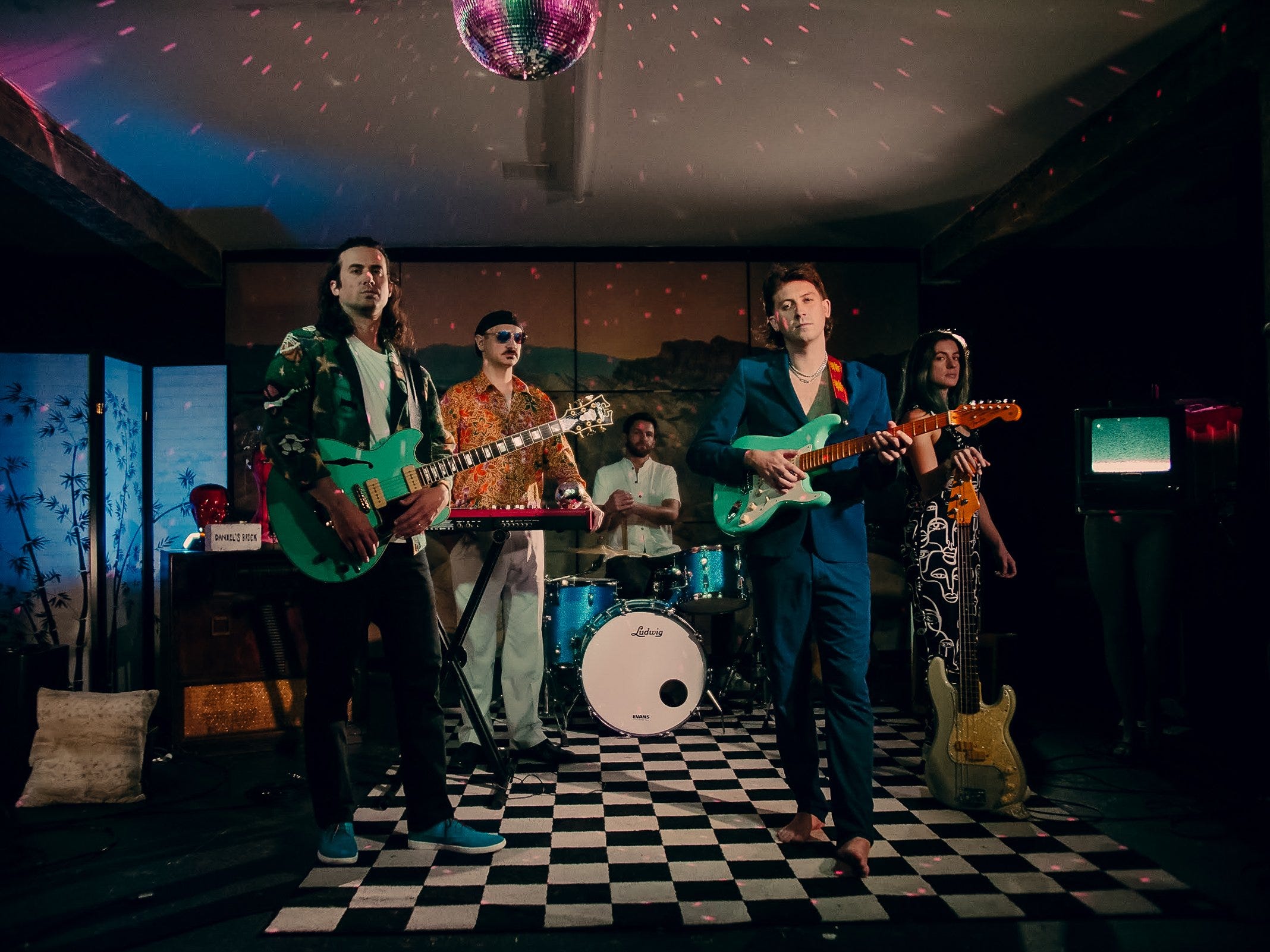
Analog Dog moves as a constellation. Austin Waz on vocals, guitar, keyboards, and synths, shaping the vision. Rob Nicol on vocals and guitar, grounding the songs with muscle and melody. Jason Blasingame weaving keyboards, synths, and saxophone into something elastic and unpredictable. Dr. Celia Ford on bass and vocals, anchoring the sound with precision and pulse. Kale Frank on drums, driving the whole thing forward, steady and alive.
Together, they said yes to slowing down long enough to listen to what wanted to be made next.
After the party, after the new year, after the invitation became real, I interviewed Austin to understand him better.
“I used to sing in the bathtub with my mom,” he said. “That’s my earliest memory of it all.”
In fourth grade, he got in trouble for talking during the national anthem. His teacher made him stand in front of the class and sing it alone, intending it as punishment.
“I remember everyone smiling as I hit the high notes,” he said. “Even the teacher.”
By sixteen, music stopped feeling optional.
“The more I learned about the brutal conditions of the material world and the plague of capitalism,” he said, “the more I felt like I had to give my life to art.”
Going home for Christmas recently clarified that truth again.
“There’s a lot of cold sadness where I come from,” he said. “This year, I picked up the guitar and realized, wow, this is what always kept me safe.”
Music was where he learned to dream boldly, to be loud and spiritual and unafraid.
“I was born a next-generation dreamer,” he said. “Someone who believes all religions can come together in their highest forms. Someone who believes love and its vibration are stronger than any other force on the planet. So of course I moved to San Francisco to play music with my friends for as long as I can afford it.”
When I asked what almost stopped him from continuing, he rejected the premise.
“The idea of stopping is just a figment of doubt,” he said. “Energy can’t be created or destroyed. An object in motion stays in motion. In that way, I simply am.”
What he had to unlearn was the idea that there was something to accomplish at all.
“The internet is a dream-eating monster,” he said. “No one is judging you but yourself.”
Analog Dog, he explained, was born the same way our meeting was.
“People keeping an eye out for one another,” he said. “Listening for the beat.”
Santa Cruz, to him, feels intuitive.
“Music feels like surfing or skating,” he said. “Using what’s already there just to catch a wave. Santa Cruz has that vibe. Like it’s all right here.”
Creating, however, costs him everything.
“I don’t have a lot of boundaries between myself and the art,” he said. “Most everything I do is in service of this dream.”
When I asked what performing without a raised stage makes unavoidable, he didn’t hesitate.
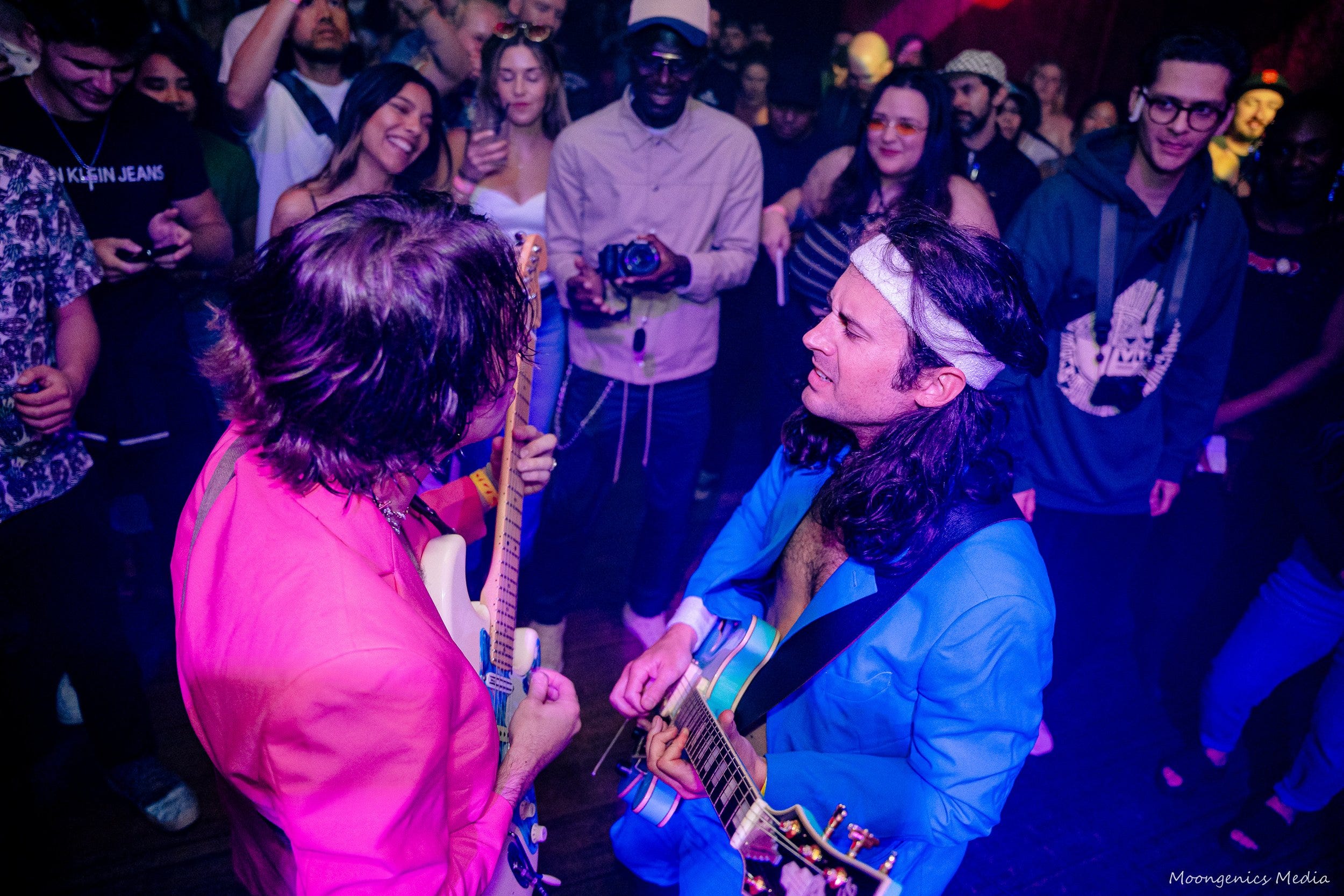
“You have to look people in the eyes,” he said. “The hierarchy fades away. The crowd and the performer can become one.”
This is why spaces like Chez Serendip matter to artists like him. Nature, slowness, and an audience willing to listen change everything.
“When the audience is primed for depth,” he said, “I really light up.”
What would make the night enough?
“I just need to stay present,” he said.
What he hopes the audience leaves with is simple.
“The feeling that magic is real,” he said. “That you don’t need to be famous to be the best band in the world.”
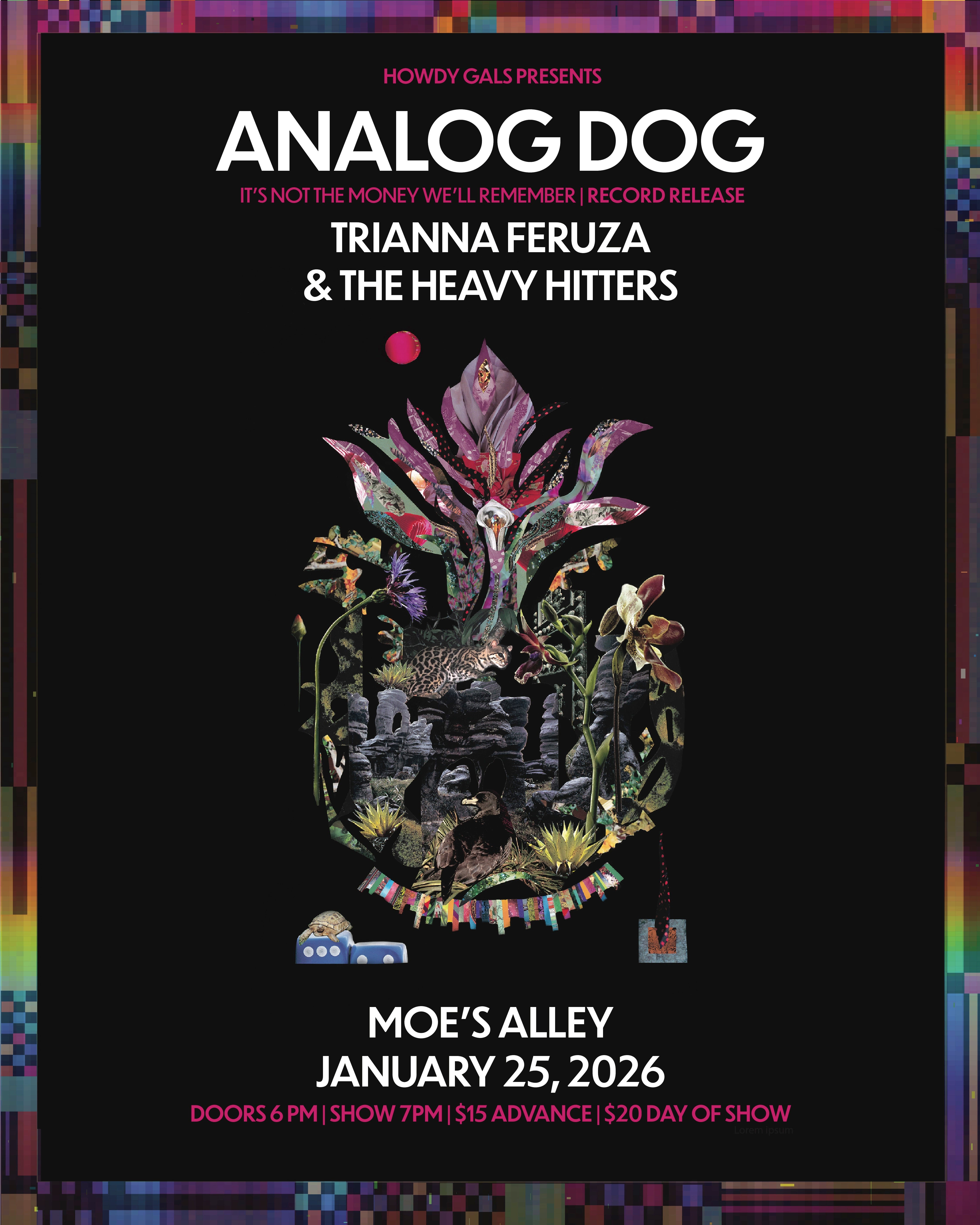
As the band prepares to come through Santa Cruz, staying at Chez Serendip before playing Moe’s Alley on January 25, there is a sense that this meeting was never accidental. It feels like part of a longer story about choosing proximity over performance, analog over algorithm, presence over endless documentation.
That feeling deepens knowing they’ll be sharing the night with Santa Cruz legends Trianna Feruza & The Heavy Hitters, artists whose music is rooted just as deeply in community, theatrical storytelling, and the belief that live performance is a form of connection, not consumption.
In a world obsessed with metrics and memory storage, Analog Dog is asking a quieter question. What happens when we let sound carry what cannot be saved?
“What I hope people carry with them,” Austin said, “is love.”
Somewhere between a dial-up tone and a Steinway key, between a Christmas party in San Francisco and a night under the redwoods, the answer begins to hum.
And maybe that is enough.
About the Author
Alisa Sieber is a writer, veteran, and founder of Chez Serendip, a creative sanctuary and artist residency tucked into the redwoods of Scotts Valley, California. Her work lives at the intersection of art, memory, and lived experience, often exploring what happens when people slow down long enough to tell the truth.
She is the author of How the Fuck Did I Get Here? (HTFDIGH) and How the Fuck Did We Get Here? (HTFDWGH), twin series of radical self-inquiry and journalism disguised as personal essay. Across her writing, Alisa traces how individual reckoning reveals collective patterns, examining creativity, generational cycles, power, spirituality, and the quiet resistance found in making art together.
As a contributor to The 831, Alisa covers Arts & Culture through a deeply local lens, focusing on music, film, and creative spaces that challenge extraction, hierarchy, and performance culture in favor of intimacy, presence, and connection.
Connect
✉️ Email: alisa@chezserendip.com
🧠 Substack: alisasieber.substack.com
📸 Instagram: @alisa.sieber
▶️ YouTube: @writingbyalisa
Read More by Alisa Sieber
Alisa’s Arts & Culture writing explores how music, film, and creative spaces become sites of resistance, remembrance, and belonging. Rather than reviewing art as product, she approaches it as lived experience, asking what stories reveal about power, community, and the rooms we gather in.
If this piece resonated, you may also want to read:
Additional Arts & Culture stories can be found at The 831, where Alisa covers music, film, festivals, and creative rebellion across Santa Cruz, Monterey, and San Benito counties.
About The 831
The 831 is an independent journalism collective serving California’s Central Coast, including Santa Cruz, Monterey, and San Benito counties. Born after the collapse of local media, The 831 exists to restore proximity, accountability, and creative rebellion through storytelling.
We believe journalism should feel human, lived-in, and rooted in place. Our stories are written by people who live here, who know the tide, the traffic, and the weight carried in small moments.
From Arts & Culture to News & Accountability, from Community Voices to Environment & Science, The 831 documents the creativity, contradictions, and courage of the Central Coast.
No algorithms. Just people telling the truth about where they live.