
Make Stories Dangerous Again
How a film called "Fucktoys" and a dying newsroom taught me that the only way to save storytelling is to make it dangerous again.


Art isn’t supposed to be safe. Neither is journalism. But somewhere along the way, we started believing comfort was the goal. We sanitized our stories, smoothed out the edges, made everything palatable enough to scroll past without flinching. We turned news into content, film into product, discomfort into something to be avoided at all costs.
And then we wondered why no one was paying attention anymore.

When KION went dark this past September, fifty years of local news silenced overnight, I felt something flicker out that I couldn’t quite name.
The announcement came quietly, the way all endings do now: a paragraph posted online, an unexpected all-hands meeting, cameras powered down before anyone had time to say goodbye. I wasn’t a devoted viewer, and maybe that’s part of why it died. Maybe we all let it disappear by degrees, scrolling past local investigations while bingeing shows that cost more to make than KION’s entire annual budget.
I felt its absence because my community did, but also because I knew I’d failed to notice it was dying until it was already gone. Friends. Parents. Journalists I’d met through community circles, suddenly out of work because people like me hadn’t been paying attention. For some, it was the loss of a paycheck. For others, the loss of purpose. And for all of us, it was the loss of proximity, the last thread connecting Santa Cruz, Monterey, and Salinas through a local lens instead of a corporate filter, severed while we weren’t looking.
What we lost wasn’t just news. It was accountability. The investigations that made city councils uncomfortable. The stories that didn’t fit neat narratives. The daily evidence that our community was messy, complicated, human. When a newsroom dies, a neighborhood loses its memory. But more than that, it loses the obligation to witness itself, unedited.
Out of that silence, The 831 was born. A guerrilla-style news collective built by the very people left behind, doing the kind of journalism that refuses to be polite. Grassroots storytelling that chose danger over decorum: messy, human, unpolished, alive.
When I heard about it, I recognized the work immediately. I’d been doing my own version of resurrection. My education was in systems built to silence: military hierarchies, corporate ladders, institutional machinery that reward control over curiosity.
After years playing roles I didn’t write, I built Chez Serendip, a cultural sanctuary in the Scotts Valley redwoods where artists remember that creation is resistance. I understood exactly what they were building because I was building the same thing. That’s how I found my way here, covering Arts & Culture for a project that believes discomfort is the price of truth.
The same defiance was resurrecting the Santa Cruz Film Festival. Paul Bronisław Kmiec and Alanna Lee Nickles had transformed it into a year-round organism, a living network for the kind of art that refuses to play it safe.
On opening night, I walked into the Del Mar Theatre for Annapurna Sriram’s Fucktoys, winner of the SXSW 2025 Special Jury Award for A Multifaceted Performance, and it was every bit as feral, unfiltered, and beautifully bizarre as the title promised. It would teach me more about storytelling and rebellion than any of my so-called lessons in leadership ever did.
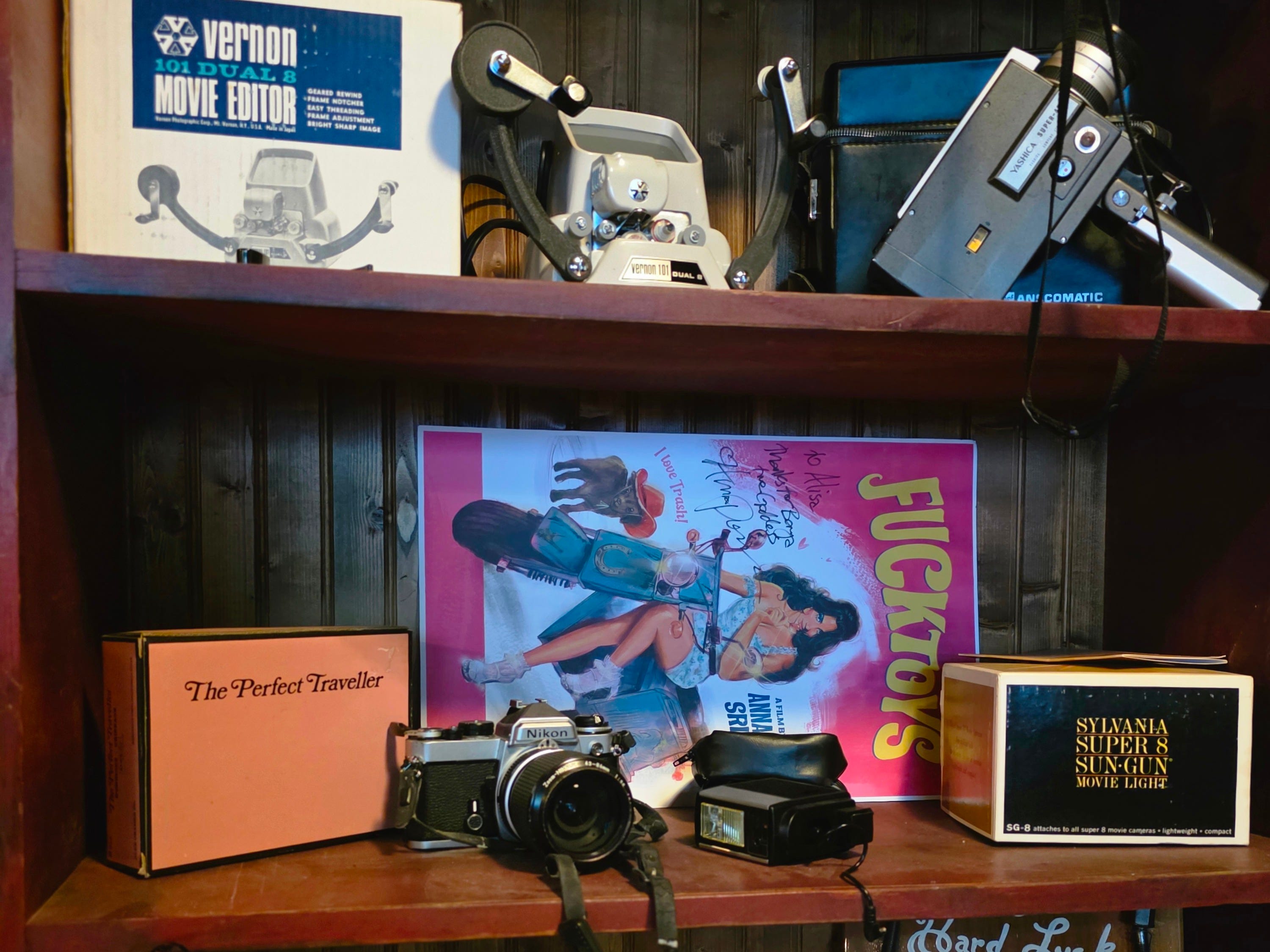
The Film That Disarmed Me
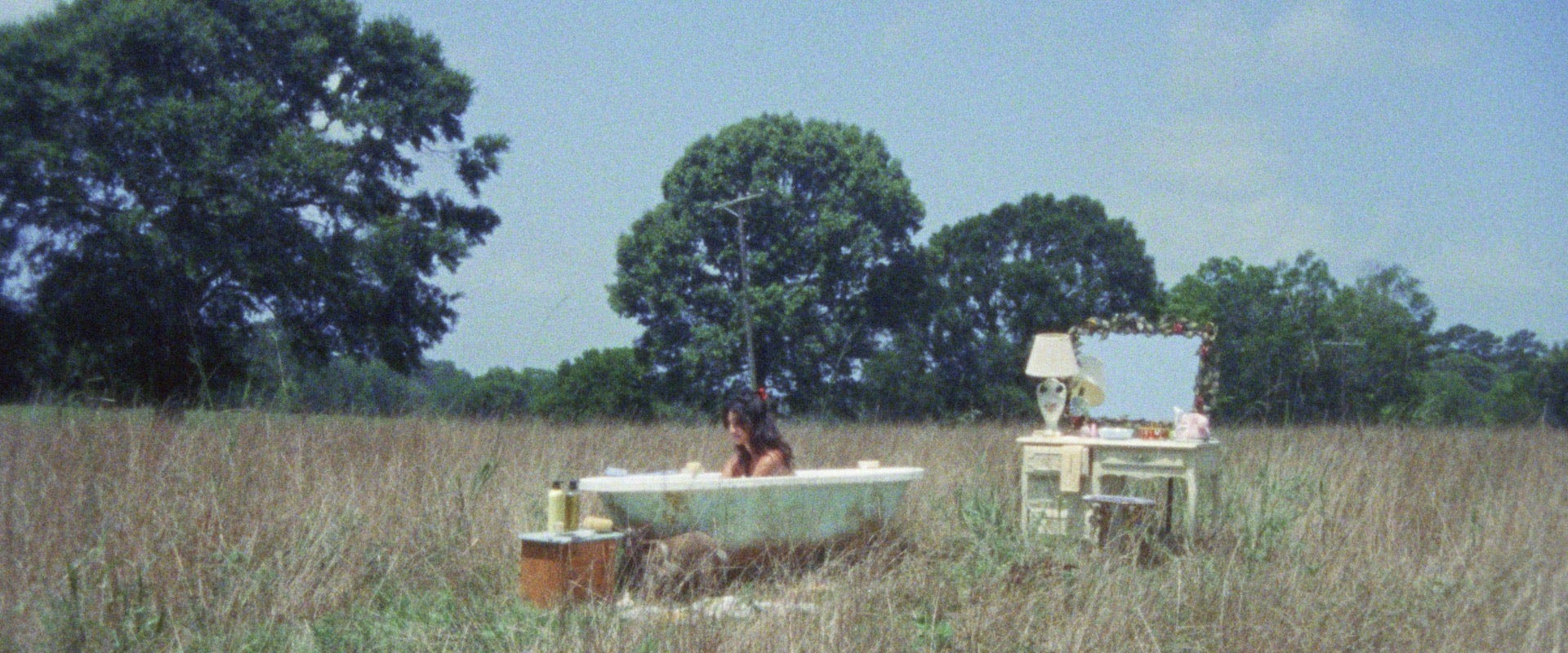
It had that timeless, analog feeling you can’t fake, the kind of film that makes you forget what decade you’re in. Shot on 16mm film in anamorphic widescreen, the format itself was a rejection of digital safety, a choice that meant living with imperfection and risk.
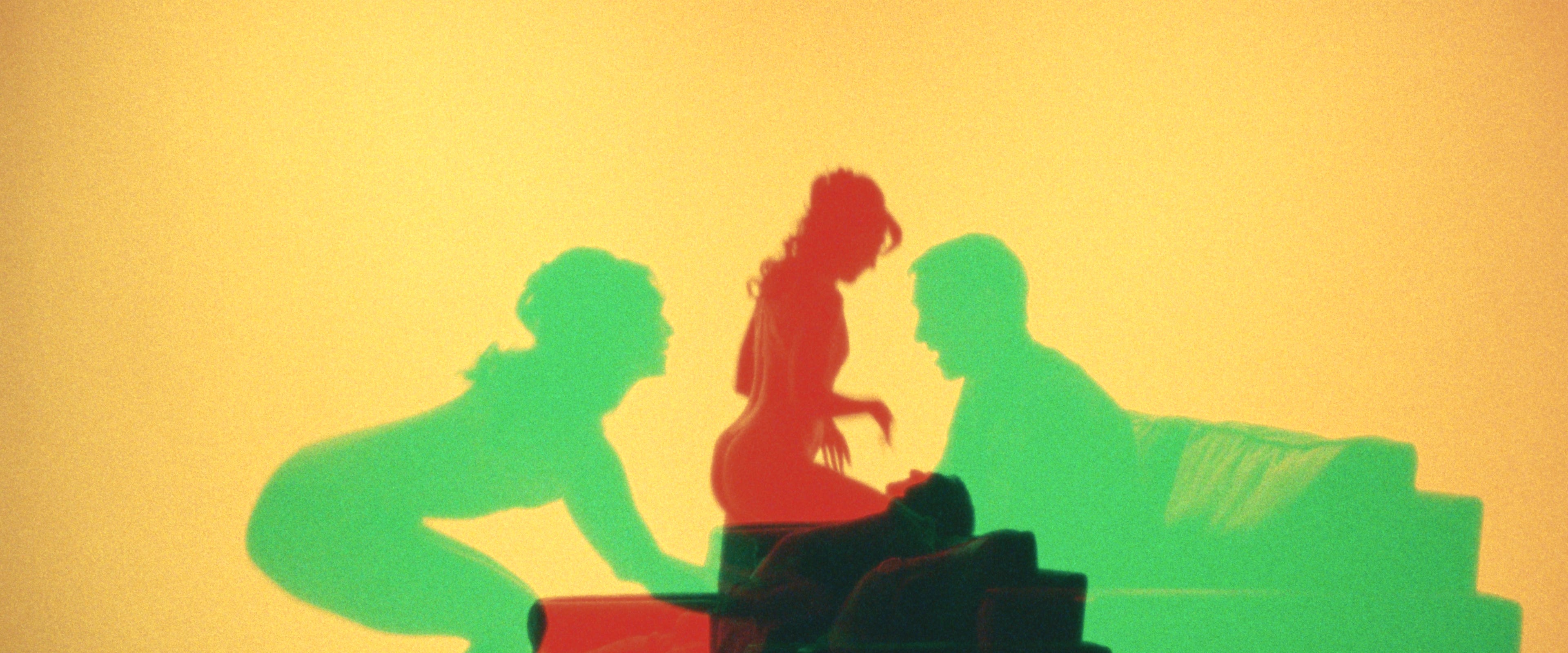
The retro grain isn’t nostalgia alone, it’s handcrafted resistance to the clean digital aesthetic dominating modern cinema. It could’ve been the 60s. Or the 70s. Or the 80s. It was like watching Requiem for a Dream if it had been rewritten as a John Waters comedy, equal parts absurd, raunchy, and weirdly philosophical. You couldn’t help but laugh, even when you weren’t sure if you should.
The film follows AP, a part-time sex worker and full-time chaos magnet who’s convinced the universe has it out for her. After a psychic floating in a swamp tells her she’s cursed, she does what women are conditioned to do: assumes it’s her fault and sets out to fix it. What follows is a pilgrimage through Trashtown USA, a dystopian playground of strip clubs, oddballs, and broken people trying to buy redemption in all the wrong places. Neon sweat slicking the humid air. Cotton-candy skies distorting reality. Mirrored strip-club lights refracting through the strange fever dream of America’s underbelly.

The journey is structured as a deliberate reimagining of The Fool’s Journey from the Tarot’s Major Arcana, each scene built around a card’s symbolic meaning. AP moves through archetypes like stations of the cross, from The Fool to The World, every encounter another test in an absurd spiritual gauntlet. Annapurna built the film from a lineage of cult cinema: Fellini’s Nights of Cabiria, Gregg Araki’s Nowhere, Asia Argento’s Scarlet Diva, films that understood how to make outsider stories feel epic.
Editor Lilly Wild spent months calibrating a tone that could straddle campy absurdism while remaining grounded and sincere, keeping the characters emotionally real inside a cartoon world. It’s why the film’s sincerity lands despite its chaos.
It was hilarious, vulgar, and nostalgic in a way that made my body remember something I’d forgotten.
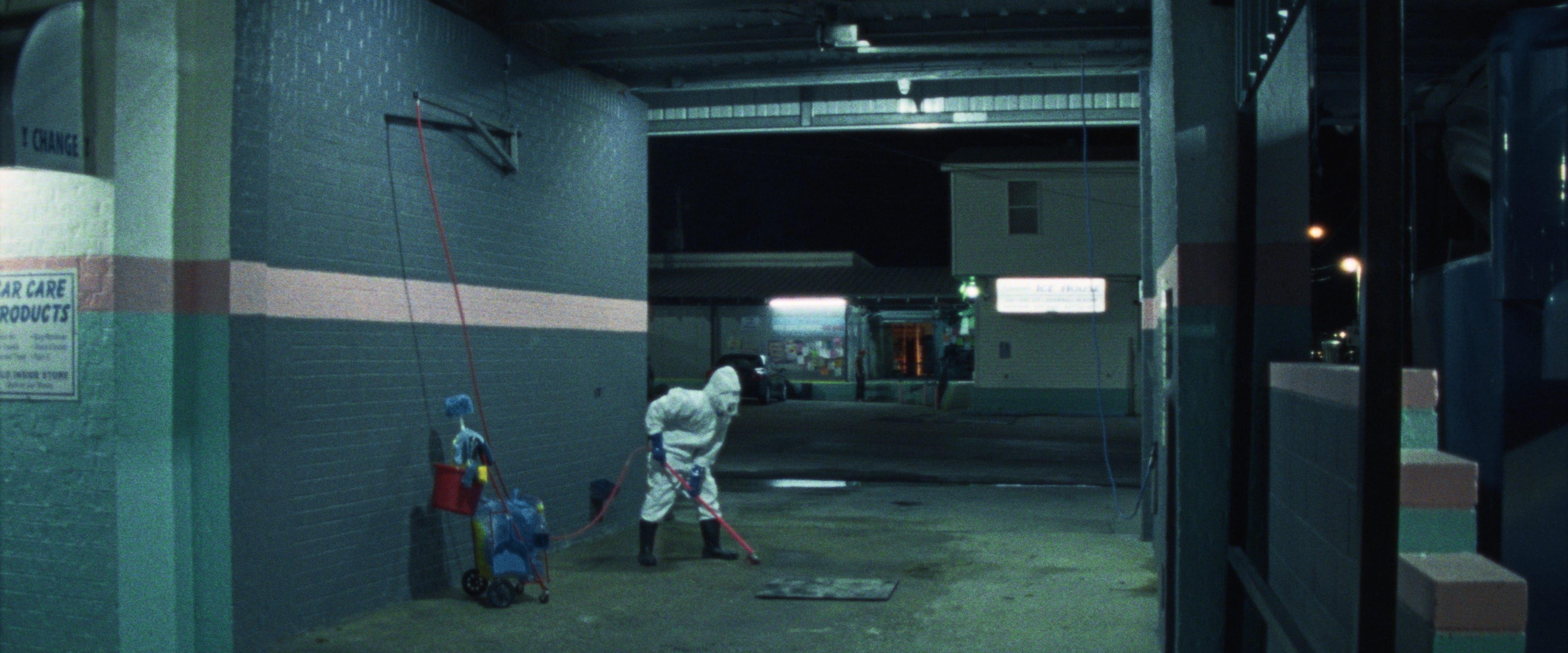
One of the characters, a trust-fund baby painter into some questionable kinks, creates art so childish you can see the actors’ authentic reaction in the scene where they’re supposed to be impressed by it. The set design itself is its own punchline: beer cans labeled “Dad Beer,” janitors wearing water jugs on their heads like dystopian helmets, the constant reminder that nothing in this world is quite what it seems.
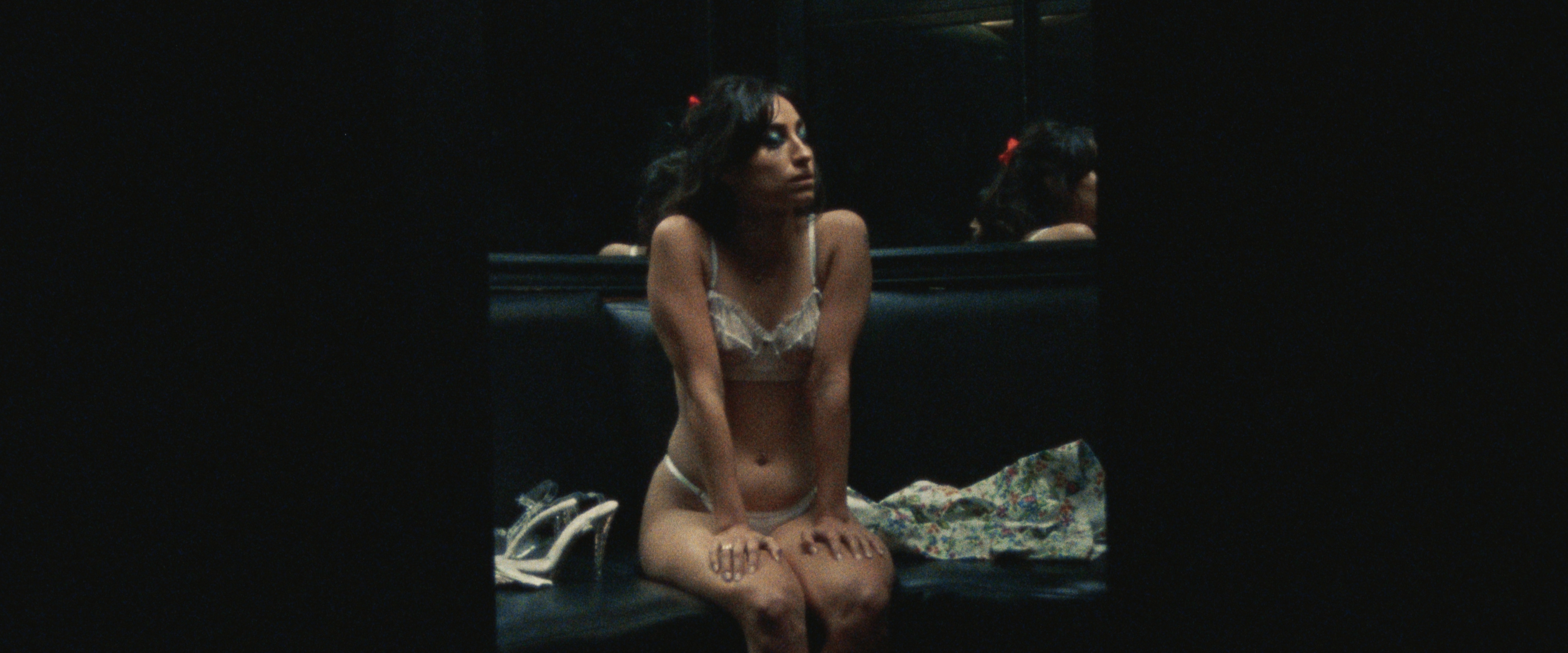
Then came the scene where AP spits while going down on a client, filmed with this haunting mix of humor, humiliation, and self-possession.
It looked like something you’d find on a VHS tape hidden in your dad’s closet: grainy, cheap, intimate. But somehow, it felt sacred.
It was a deliberate political gesture, not just provocation. Annapurna was defying the unspoken taboo that men in film are free to explore sexually explicit narratives while women are tacitly forbidden from doing the same.
It was feminist in the way real feminism often is: not polished or polite, but unhinged and clever. It poked at white privilege, at racism, at masculinity and its fragile need to dominate. But what lingered most for me was how it revealed the violence women carry, not just the kind done to us, but the kind we do to ourselves when we shrink to fit inside someone else’s script.
The curse isn’t metaphor, it’s diagnosis. AP’s affliction is simply being a woman trying to survive late capitalism’s necropolitics, a system that demands she be mutable, performative, fetishized, and endlessly resilient just to exist. The psychics promising to lift the curse for a thousand dollars are just another transaction in an absurdly transactional world. Her struggle mirrors the contemporary hustle culture where survival itself becomes a performance, where precarity is rebranded as flexibility, where we’re all scootering deeper into the night trying to make rent.
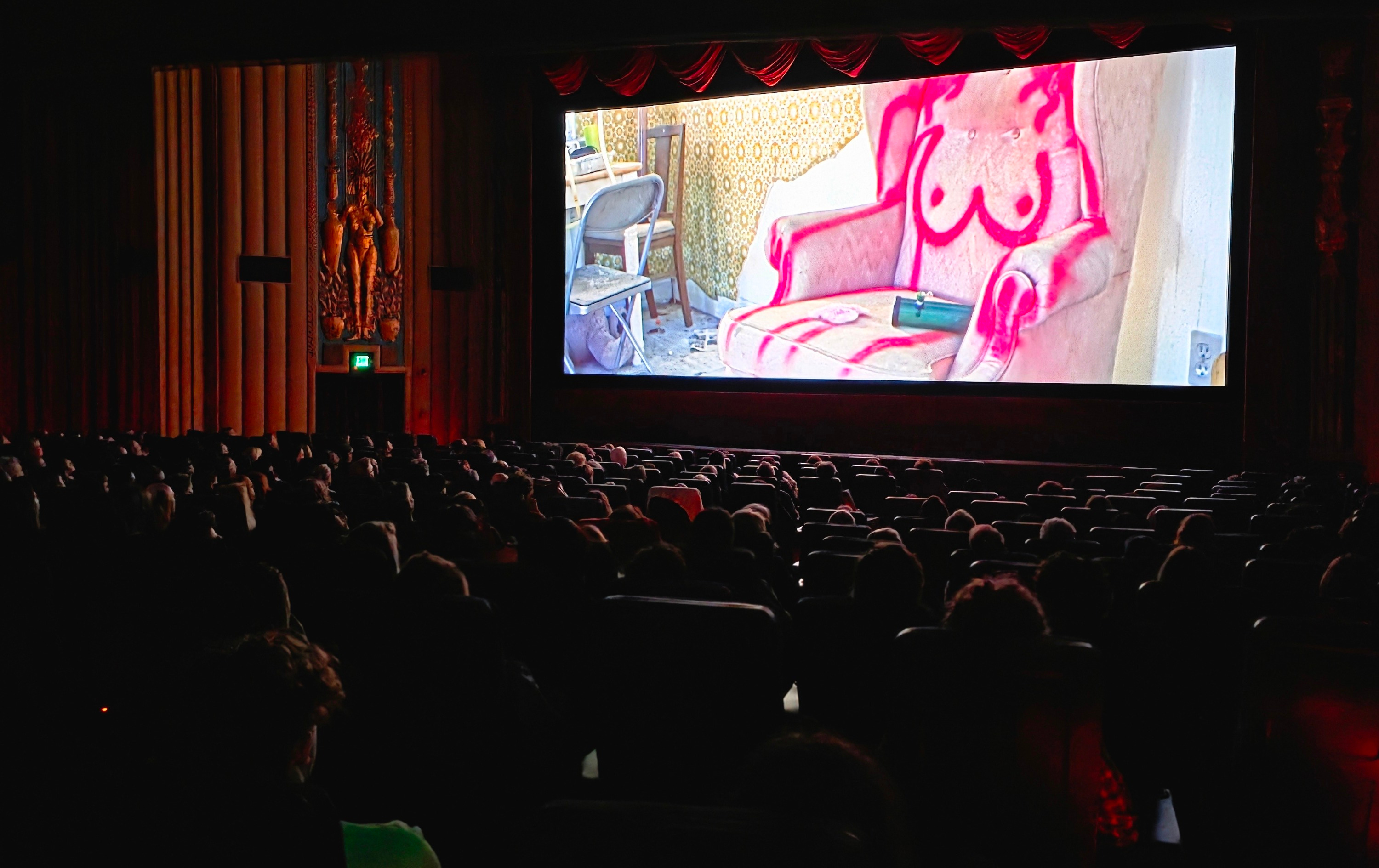
By the time the credits rolled, I realized I’d been holding my breath.
The applause came like release: wild, awkward, honest. The crowd was an eclectic mix of locals. College kids, artists, middle-aged couples, and a few older men who looked like they weren’t sure if they’d just been enlightened or attacked.
Breaking the Spell
Annapurna took the stage, radiant, grounded, and real. She thanked everyone for staying, for being “open-minded enough to make it to the end,” and admitted even her own dad struggles to watch it.
Then she told the story behind it.
Before she even shot a frame, Annapurna had to fight for the film’s existence. She was told repeatedly to change the title, that she wasn’t experienced enough to direct, that she wasn’t the right “pedigree” for investors. Men in the industry invited her to meetings that turned out to be dates. Financiers made unwelcome physical advances while promising money. She was regularly fetishized or dismissed by the very people she sought collaboration from.
She refused every time. The title itself became an act of rebellion, a refusal to sanitize her vision before it could even exist. “I felt like American filmmaking was trending toward increasingly safe and sanitized storytelling,” she said, “and I wanted to find a title that was not only funny, but also unapologetic and bold.”
The story itself came from a harrowing moment: a psychic told her to dump her boyfriend to cure a chronic illness. She did, immediately. “I felt insane,” she said. “Who does that? Who dumps their boyfriend because a psychic tells them to? Apparently me!”
In the throes of heartbreak, she began writing.
“I was a struggling actor. I grew up on movies like But I’m a Cheerleader and Polyester and wanted to be part of projects like that. But they just weren’t happening. The roles I got offered were ‘doctor,’ ‘girl in a headscarf,’ no personality. So I decided to create something where I could be fucking fun and iconic, and cast people who don’t usually get to be these kinds of characters.”
Making the film was its own curse. Hurricane Ida destroyed their first production schedule. They shot through an Omicron surge during Mardi Gras with a dwindling budget. Annapurna directed and starred simultaneously, filming on a raft in a swamp, on a moped at night past refineries. The film’s rawness isn’t aesthetic, it’s evidence.
I was inspired by her words, by her grit to tell this story in the way she had.
The Stories We’re Afraid to Tell
I know what it feels like to be typecast, as a service member, a businesswoman, a wife, a lover, a “strong woman” who doesn’t break.
Every system I’ve ever entered has handed me a role before I could even speak my first line.
But Annapurna didn’t wait for permission. She built something outside the boundaries of what the industry said she could be. She took the box she’d been shoved into and turned it into a set piece, lit it with fluorescent pinks and swamp light, and danced on top of it.
It was the same spirit that created The 831. The same impulse that made me build Chez Serendip. The same defiance that keeps artists alive in a culture that keeps trying to make us palatable.
Because yes, on the surface, Fucktoys is a wild, crude comedy about a hooker on a mission to break a curse and her own bad habits. But underneath, it’s something else entirely: a meditation on desire, danger, and the way women survive even when we’re not supposed to.
And maybe that’s what I needed to see. I’ve been writing a book for years, a saga called How the Fuck Did I Get Here, with an opening as jaw-dropping as Fucktoys. But I keep finding reasons not to finish it. Not to share it. Because what if people think it’s too much? What if the truth of my story makes me unpalatable?
Watching Annapurna own every provocative choice reminded me: the stories we’re afraid to tell, the ones we think will get us dismissed or judged or labeled as too much, are exactly the ones that need to exist.
The permission we’re waiting for isn’t coming. We have to give it to ourselves.
After the Q&A, I walked to Pizza My Heart, ordered a slice, and sat in a booth with a Discretion Blonde, the glow of the Del Mar still flickering in my brain. I needed time to process what I’d just seen, how Annapurna had built a world that felt both ancient and futuristic, handmade and holy.
Reading through the film’s production notes later, I realized nothing about Fucktoys was accidental. Every outrageous detail, the swamp psychics, the lamb sacrifice, the neon pulp, was part of a tarot-mapped journey through intimacy and exploitation. It’s satire as scripture, absurdity as exorcism.
If Annapurna can make a film called Fucktoys and win awards for it, maybe I can finally finish my own dangerous story. Maybe you can tell yours.
The Afterparty
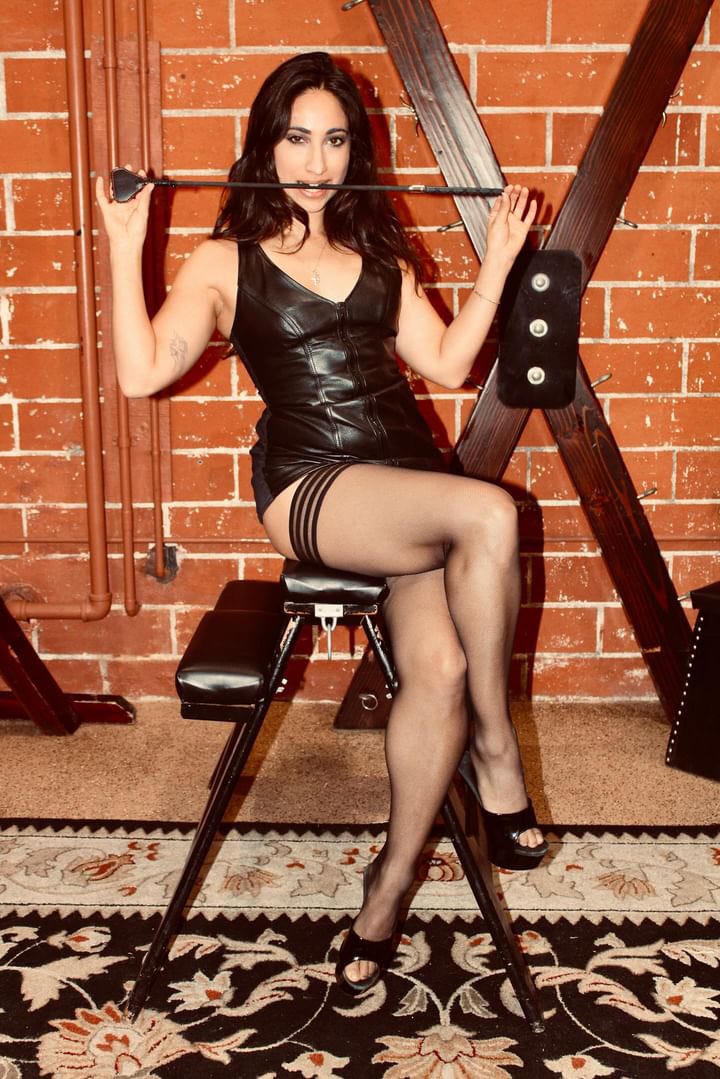
Later that night, at the MAH afterparty, the courtyard was alive. Music, laughter, food tables, generations mingling. By the end of the night, I found myself in conversation with Annapurna, surrounded by college students and one self-proclaimed boomer. She told us about her years working as a professional dom in L.A., how much of the dialogue in the movie came from real encounters, real men, real absurdity.
When one of the college girls said the movie reminded her of Napoleon Dynamite, Annapurna and I looked at each other and laughed, that strange, nostalgic laugh of two millennials who remember when that movie became a camp classic.
That’s when Annapurna said something I’ll never forget:
“I want every teenager to smoke a joint and watch this movie. That’s how you make people connect again, give them common core memories. Make it feel a little naughty.”
And I thought, yes. That’s it. That’s the motivation behind my own art, my own writing. The greatest self-awareness comes from the moments we’re not supposed to have, the stories that make us uncomfortable, the art that refuses to be quiet.
The Real Rebellion
Maybe that’s the real rebellion: not the movie, not the festival, but the willingness to stay in the room when something makes you squirm.
We live in a world that edits out its own edges. A world that cancels what it can’t categorize, that scrolls past anything too raw, too slow, too human. We see a curse word in a title and assume it’s trash. We see an “ethnically ambiguous” face and decide we can’t relate. We hear a story that doesn’t mirror ours and decide it has nothing to teach us.
But what if the things that make us uncomfortable are the very things trying to wake us up?
Maybe we need to start watching movies the way we used to, with the wild curiosity of teenagers who didn’t yet care about optics or algorithms. Maybe we need to remember what it felt like to sit cross-legged on a carpet, smoking a joint in a best friend’s basement, laughing so hard at Napoleon Dynamite we forgot to check the time.
Maybe that’s what real art does: it brings us back to the present tense. You can’t stream Fucktoys. You have to show up for it, sit in a theater shoulder to shoulder with strangers like you did when American Pie came out, and let yourself be changed. It asks for intention, not just attention. It refuses instant gratification.
It reminds us what it means to feel something uncurated, to get high on the now instead of the what-ifs.
That’s what Fucktoys did for me. It shook me loose from my own performance of control. It reminded me that story isn’t supposed to be safe. It’s supposed to be alive.
Maybe that’s the trick, to make something raucous, fun, heartfelt, and human enough to remind us why we ever told stories in the first place.
And maybe that’s how we keep storytelling alive too, by choosing to stay, to witness, to feel.
Because when a newsroom dies, a neighborhood loses its memory. But when we show up for each other’s stories, in a theater, in a gallery, in a backyard under redwoods, a community remembers itself.
About the Author
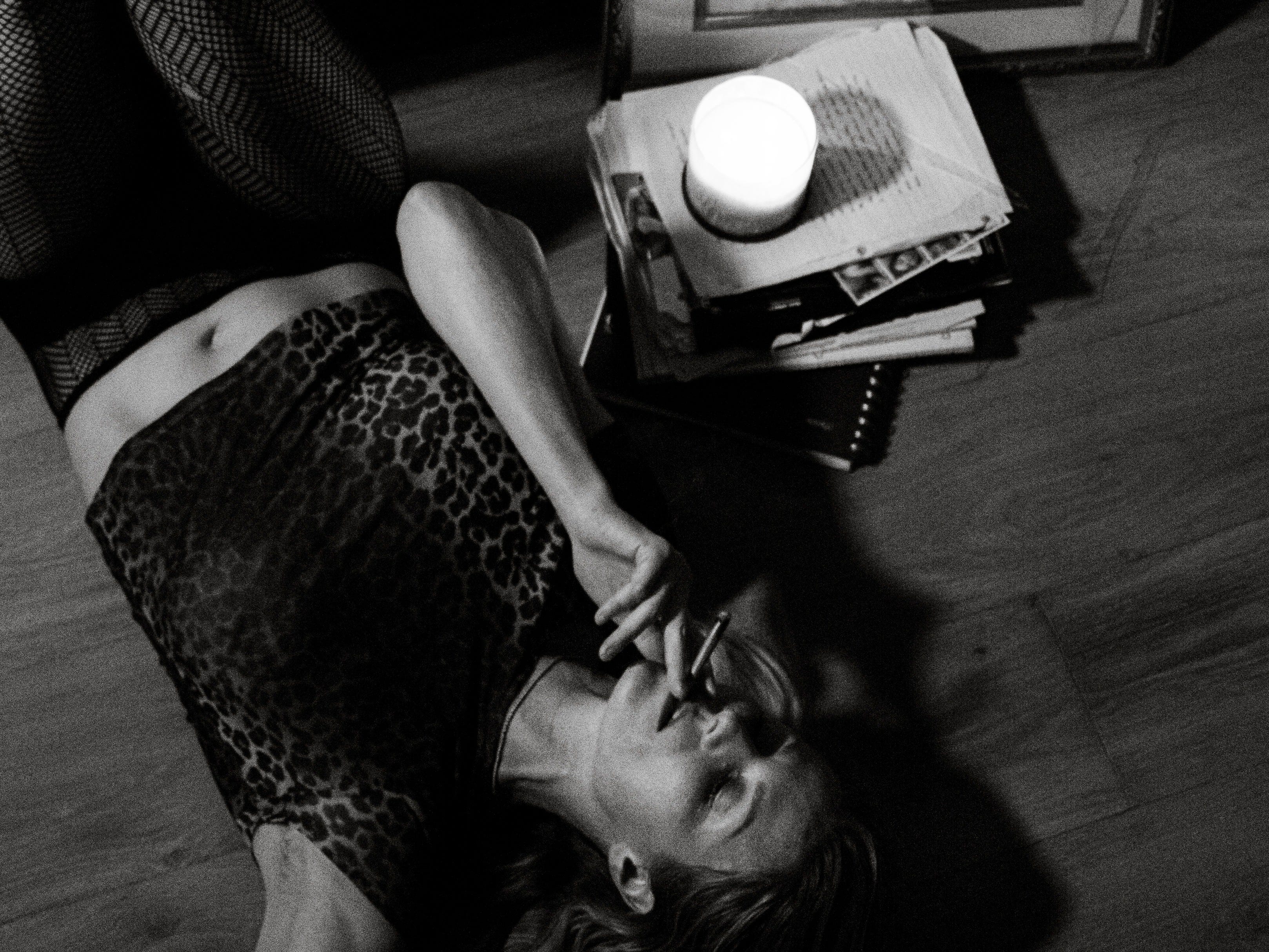
Alisa Sieber is a writer, veteran, and founder of Chez Serendip, a creative sanctuary and artist residency tucked in the redwoods of Scotts Valley, California. She is the author of How the Fuck Did I Get Here? (HTFDIGH) and How the Fuck Did We Get Here? (HTFDWGH) — twin series of radical self-inquiry and journalism disguised as personal essay. Her work bridges the intimate and the systemic, tracing how individual reckoning exposes collective collapse.
As a contributor to The 831, Alisa covers arts and culture through the lens of creative resistance, local storytelling, and the power of discomfort to wake us up.
Connect
✉️ Email: alisa@chezserendip.com
🧠 Substack: alisasieber.substack.com
📸 Instagram: @alisa.sieber
▶️ YouTube: @writingbyalisa
About The 831
The 831 is an independent collective on the Central Coast. We cover art, culture, and the communities that make them matter, with honesty and heat. If this moved you, help keep it going by subscribing, pledging, and sharing with a friend.
I don't know if I'll get a chance to see the film but this is a phenomenal piece. My mother tried to talk me out of writing my memoir for years, but it was an ordeal I had survived and a story I needed to tell in order to thrive. I'll be contributing to the 831 soon. You're clearly a talented writer, Alisa. Let me know how I can encourage you to complete your book.
Awesome story. Thank you.