
Beyond the island
A new book that explores the complex legacy of Animal Crossing: New Horizons


Nearly six years after Animal Crossing: New Horizons became a global phenomenon during the COVID-19 pandemic, a new book by UC Santa Cruz Professor Noah Wardrip-Fruin takes a critical look at how the cozy life simulator provided comfort for people while simultaneously reinforcing capitalist structures and gig-economy dynamics.
“I spent hundreds of hours playing Animal Crossing: New Horizons with my kids during the first year of the pandemic,” said Wardrip-Fruin. “And part of it is cultural—the game had a huge impact.”
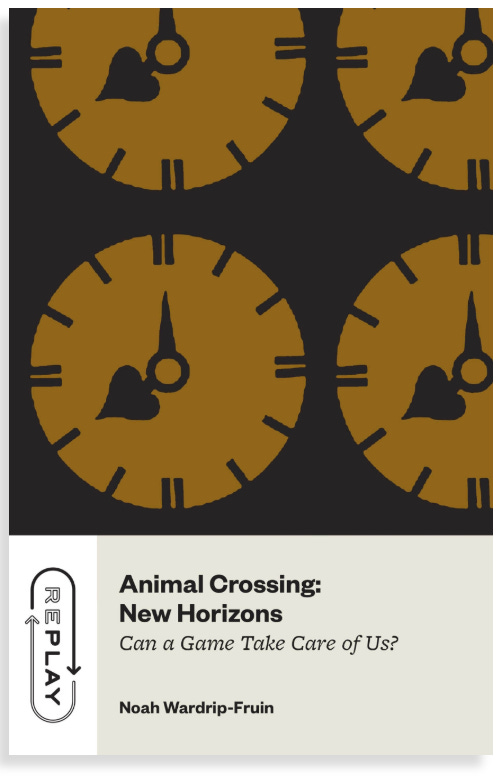
The book Animal Crossing: New Horizons, Can a Game Take Care of Us? was released by the University of Chicago Press as part of its “Replay” series, just ahead of Nintendo’s anticipated release of a new version of the game in January 2026.
A digital sanctuary
During the height of the pandemic, New Horizons averaged one million copies sold daily, according to UC Santa Cruz, and transcended the typical boundaries of gaming culture.
The game became a platform for everything from political campaigns to aquarium livestreams.
“The BBC reported that Animal Crossing was removed from sale in China amid Hong Kong protests, so clearly somebody thought it had an impact outside of the game!” said Wardrip-Fruin.
He also said that the game’s massive appeal had to do with its ability to provide safety in an unsafe world. And, unlike most video games that thrive on risk and danger, Animal Crossing offered a guaranteed loop of success, so long as players obeyed the structure.
“If you do the game tasks, you basically can’t fail,” said Wardrip-Fruin. “I think that safety was very important, but it was also limiting in ways that weren’t always obvious.”
Safe capitalism?
One of the book’s central critiques is the concept of “safe capitalism.”
While the game allows players to gain wealth and participate in a stock market for turnips (the “stalk market”), it removes the risk of bankruptcy and player agency in the economy.
“You can run out of money because you bought too much stuff, but that doesn’t really prevent you from doing anything,” said Wardrip-Fruin. “Maybe that isn’t the ideal vision of the economy that we want to give to kids.”
He observed that while his children were inspired to start their own businesses within the game, the mechanics only allowed for “piecework” assigned by the game itself, and argues that this reflects the reality of pandemic-era gig work rather than entrepreneurial freedom.
Despite the economic critiques, the book highlights the game’s profound role in fostering community when physical connection was impossible.
For Wardrip-Fruin, who identifies as disabled, the game opened up new avenues for parenting.
“I was able to do things like play tag, hide and seek, and other games like that that my son had never been able to play with me because I’m just not able enough,” he said. “It was really rewarding for him and for me.”

The game also became a vital space for marginalized communities, hosting everything from queer support groups to virtual protests for Black Lives Matter and the Free Hong Kong movement.
On the horizon
As the world prepares for the next version of Animal Crossing in 2026, Wardrip-Fruin’s book highlights the powerful, yet sometimes manipulative, psychological mechanisms within our own digital habits.
“It’ll be really interesting to me to see what happens when the next Animal Crossing comes out—which presumably won’t be during a global pandemic,” he said, “and see how people respond to these things that are both manipulative, but also structure and progress creating.”
 | A guest post by
|